
 https://bswcommunityservices.co.uk/wp-content/uploads/2026/03/Designer-1000x667.png
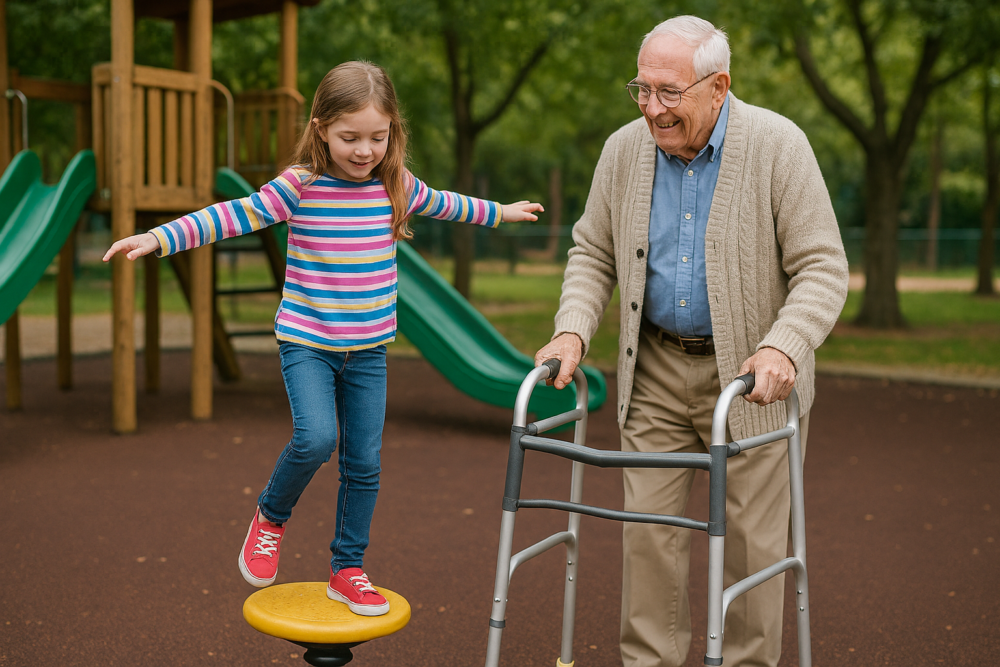
An older adult using a walking frame stands beside a young child at a playground. The child is balancing with arms outstretched on a round, yellow balance toy, with slides and wooden play structures visible in the background. Trees and soft outdoor flooring surround the scene.
https://bswcommunityservices.co.uk/wp-content/uploads/2026/03/Designer-1000x667.png
An older adult using a walking frame stands beside a young child at a playground. The child is balancing with arms outstretched on a round, yellow balance toy, with slides and wooden play structures visible in the background. Trees and soft outdoor flooring surround the scene.
Moving safely and confidently is an important part of everyday life. It helps people walk, climb stairs, stand up from a chair, play, get out and about, and take part in the things they enjoy.
Sometimes mobility or balance can become more difficult. You or your child might feel unsteady, trip more often, or find certain movements harder than before. This can affect confidence, independence, and how easy it feels to take part in daily activities.
More about mobility and balance
What might be causing issues with your mobility or balance
In children and young people, mobility or balance difficulties might show up as delays in learning to walk, issues with coordination, frequent tripping, or finding sports and physical activities harder than their peers. Adults may also notice changes in their mobility or balance. This can be because of pain, muscle weakness, joint problems, neurological changes, reduced activity, long-term health conditions, or recovery from illness or surgery.
As people get older, it is also common to notice changes such as slower walking, stiffness, or feeling less steady on your feet. Ageing can be a factor here, as well as long-term health conditions. If mobility or balance has become harder, you are not alone. With the right support, given early enough, many people can improve their safety, reduce the risk of injury, and stay active and independent at home, school, work and in their community.
There are many possible reasons why mobility or balance might be or become difficult – and often it’s a combination, your walk or gait – your walking pattern, speed or stamina may be affected by pain, stiffness, or coordination difficulties. This can happen after injuries such as sprains or fractures, or when muscles become weaker through reduced activity. Your ability to balance –You might feel unsteady when standing or walking, or find it harder to manage stairs or uneven surfaces. Age-related changes, changes in vision or hearing, or certain medicines that cause dizziness can all affect balance.
Your coordination – For some children and young people, coordination skills take longer to develop. Sensory processing differences can also affect coordination and body awareness. In adults too, coordination changes may happen after illness or with neurological conditions.
Conditions that are limiting your movement – Pain, breathlessness or fatigue can also make moving around harder. Joint conditions such as arthritis, hypermobility (which can look like being “double jointed), or chronic conditions like diabetes, or heart and lung conditions can also be a factor. Some mobility difficulties are linked to neurological conditions such as stroke, brain injury, cerebral palsy, multiple sclerosis or Parkinson’s disease. Others may happen during recovery after surgery or injury, when strength and movement are still improving.
Fear of falling – It is also common to feel worried about falling, particularly after injury. This loss of confidence can make movement feel more stressful and difficult.
The good news is that, with the right strategies and support, many people can improve mobility and feel more confident moving around safely. Seek professional support if your mobility or balance difficulties, affect daily activities, cause pain, lead to frequent falls and trips, appear suddenly after illness or injury.
Self-help
Things you can try today.
Questions and answers
What are common signs of mobility or balance difficulties?
What causes mobility challenges in CYP?
What causes mobility problems in adults?
Can mobility and balance improve with support?
When should I seek professional advice?
Do mobility aids make people dependent?
How can children and young people be supported at school?
Can anxiety affect balance or mobility?
What activities help improve balance?
Does footwear make a difference?
How can mobility problems be prevented?
Useful links
Important:
These are sites we find useful; while we check them regularly, external sites are operated by other organisations and we aren’t responsible for their content.
Services that can help
Give us feedback on this page
Tell us what was helpful, what was missing, or if something didn't make sense. If you'd prefer, you can also make a complaint or send us a compliment.