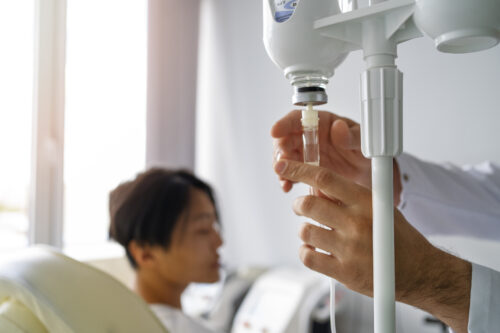
More about i need iv (intravenous therapy)
Why you might need IV therapy
There are a couple of ways we can offer IV therapy. One way uses an IV catheter, often called a 'line'. This is a thin flexible tube that allows us to give you medicines directly into your bloodstream, without a separate injection each time. It can also be used to take blood samples, saving you from repeated needle pricks.
Usually, the line is inserted into a vein in your upper arm by the hospital. The end of the line reaches up, either to a vein close to your shoulder (in which case, it is a called a midline catheter), or to a vein just above your heart (so it is called a PICC, or 'peripherally inserted central catheter').
There are also other types of IV lines, some are inserted through your chest, such as a Hickman line or implanted port. All these lines are also called 'central venous access devices' (or CVADs for short). For short term treatment (lasting less than two weeks), we use a peripheral cannula. A peripheral cannula is usually inserted into a shallow vein, for example the hand or arm.
When IV therapy is monitored carefully, it is a safe and effective way to deliver important treatment and support recovery. You may need IV therapy when you can’t take treatment by mouth, or when you need a very exact dose.
You may need IV therapy if you have an infection that needs IV antibiotics, severe dehydration from illness, vomiting or because you’re unable to drink, needs related to cancer treatment, conditions that prevent your gut from absorbing food or medicines, a blood condition that needs transfusions, a long-term health condition affecting nutrition, hydration or medication, or a condition that requires iron to be removed from your body.
IV therapy is often used when medication you swallow (like tablets or liquids) would not work well or quickly enough. Here are some of the treatments IV therapy can be used for, IV medicines – Some medicines work best when given directly into a vein, this can include antibiotics.
IV fluids – Fluids may be given to treat dehydration, maintain hydration, support kidney function, or help balance electrolytes (salts and minerals) in the body.
Chemotherapy or targeted treatments – Chemotherapy for some cancers or treatment for chronic conditions can be given through IVs therapy.
Blood transfusions – Blood or blood products may be given to treat conditions such as anaemia or blood loss.
Long-term IV treatment – Some people need regular IV treatment over time. This may use special lines such as PICC lines, central lines or implanted ports.
Venesection – Some people need regular treatment for conditions to reduce iron levels by removing blood.

 https://bswcommunityservices.co.uk/wp-content/uploads/2026/03/doctor-helping-patient-rehabilitation-1000x667.jpg
A person sits across from a healthcare professional who is holding a clipboard during a consultation in a bright room.
https://bswcommunityservices.co.uk/wp-content/uploads/2026/03/doctor-helping-patient-rehabilitation-1000x667.jpg
A person sits across from a healthcare professional who is holding a clipboard during a consultation in a bright room.